
Programme
PLENARY SPEAKERS AND WORKSHOPS
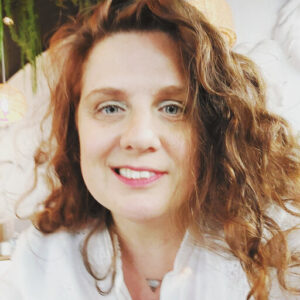
ANNA KOKKINIDOU
European Master’s in Translation coordinator in the Directorate-General for Translation: ‘The European Master’s in Translation network in the service of the public: Promoting best practices in public service translation training’
Dr Anna Kokkinidou has been the European Master’s in Translation coordinator in the Directorate-General for Translation, in Brussels, since September 2023 while she has also worked as a translator at the European Parliament, a lawyer-linguist at the CJEU, in Luxembourg, and as a freelance translator for the European Commission. Her thesis focuses on the training in legal translation to translators with (no) legal/translation background.
She has worked as a legal translator for many years prior to her work at the European institutions, as well as a research assistant at the Centre for the Greek Language where she worked on the translation of CEFR and the establishment of its levels in Greek, in the language rights of asylum-seekers and long-term residents and on test design, as well as teacher training. Her academic and research interests concern the teaching of legal translation and the professional training of legal translators, as well as language attainment of Greek as a SL/FL.
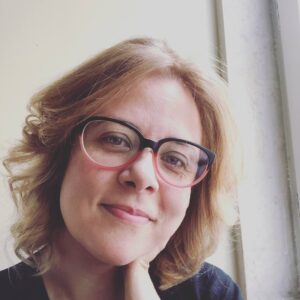
SUSANA VALDEZ
Leiden University, Netherlands
Through migrants’ eyes: Navigating access to public healthcare information
Susana Valdez is an Assistant Professor of Translation Studies at Leiden University (Netherlands) and a Visiting Fellow at the University of Warwick (United Kingdom). Her research focuses on health communication, exploring how translated health information is accessed, read, and understood, particularly in relation to the use of machine translation in public sector settings. She leads a funded project on reader reception of translated health texts, with a special emphasis on how MT affects comprehension and cognitive load. In the last 5 years, since defending her PhD thesis, she has published widely on health communication, migration, and translation technology. Her work has appeared in leading journals such as Target, The Translator, Translation Spaces, Perspectives, and The Journal of Specialised Translation, as well as in edited collections by Routledge. Prior to her academic career, she spent 15 years in the translation industry. In addition to working as a specialized translator, she was a Language Lead and editor for major tech companies. She continues to collaborate with the industry and policy stakeholders (https://orcid.org/0000-0001-5461-2078; https://www.universiteitleiden.nl/en/staffmembers/s.-valdez/publications#tab-2).
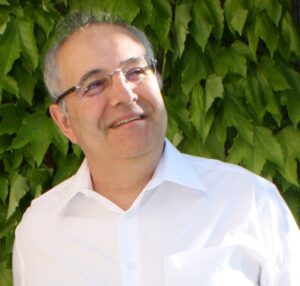
FERNANDO A. NAVARRO
WORKSHOP “Languages, Medicine and AI”
Fernando A. Navarro is a doctor, specialising in clinical pharmacology. Between 1993 and 2002 he was a medical translator at the Language Service of Roche Laboratories in Basel (Switzerland). He currently works as a freelance medical translator for large pharmaceutical laboratories and international organisations in the bio-health sector, and teaches on the ‘Master’s degree in medical-health translation’ at the Universitat Jaume I. He is a founding member of the Cosnautas platform of professional resources for medical translation; founder and first director of Panace@: Revista de Medicina, Lenguaje y Traducción; honorary member of Tremédica, Asetrad, IAPTI and UniCo; corresponding academic and member of the translation commission of the North American Academy of the Spanish Language (New York); and full member of the Spanish Association of Medical Writers. Author of the Diccionario de dudas y dificultades de traducción del inglés médico, technical director of the Diccionario de términos médicos de la Real Academia Nacional de Medicina, and author of the collection Medicina en español (seven volumes published).


ROUND TABLES
ROUND TABLE 1 (DAY 1)
IMPROVING COMMUNICATION WITH MIGRANTS FROM AFRICA WHO TRAVEL ALONG THE ATLANTIC ROUTE
Participants: Goretti García Morales, Susan Isobel Cranfield Mckay, Leticia Fidalgo González
Universidad de Las Palmas de Gran Canaria
Universidad de Ginebra
Abstract: Mass migration, usually caused by poverty, conflict or political persecution, often leads to crisis situations. The circumstances surrounding the reception of migrants arriving in the Canary Islands by irregular sea routes from Africa have a humanitarian emergency component. In fact, many people have already died taking this extremely dangerous route, and many more have managed to reach the coast in appalling conditions. Moreover, in this context, most migrants do not speak Spanish, so linguistic diversity prevents effective communication with the authorities and institutions upon arrival.
As the communication situations that arise in this context involve population groups from very different social strata, interests, languages and cultures, a good understanding requires an intercultural approach based on respect for the rights and dignity of all people, including those who are most vulnerable. In this regard, it is necessary to ensure comprehensive and flexible training in translation and interpreting for public services that align with current societal needs.
Perspectives:
Description of the multicultural context of the Canary Islands: the communication needs in the current situation will be addressed, as will the challenges for effective communication in the field of assistance to migrants from Africa.
Communication with vulnerable people: after presenting the different actors involved in communication exchanges following the arrival of boats via irregular routes, emphasis will be placed on the role played by interpreters in ensuring that migrants can make their voices heard.
Acquisition of intercultural competence and other training needs of T&I students and ad hoc interpreters: finally, some initiatives already carried out with undergraduate students in Translation and Interpreting and with ad hoc interpreters will be presented, with the aim of improving communication in this field.
ROUND TABLE 2 (DAY 2)
MACHINE TRANSLATION AND OTHER TOOLS IN HEALTHCARE SETTINGS AND SOCIAL SERVICES
Participants: Pilar Sánchez Gijón, David Orrego-Carmona, Lieve Macken
Universidat Autònoma de Barcelona
University of Warrick
Ghent University
Abstract: The use of translation technologies in healthcare and social service settings is quite common, offering opportunities to improve communication, accessibility, and efficiency in multilingual contexts. However, these tools also raise important questions about quality assurance, confidentiality, and ethical responsibility when dealing with sensitive information. This round table will explore how translation technologies are being integrated into healthcare and social service workflows, the conditions under which their use is appropriate, and the critical role of professional translators and interpreters in ensuring accuracy, empathy, and trust in these interactions.